

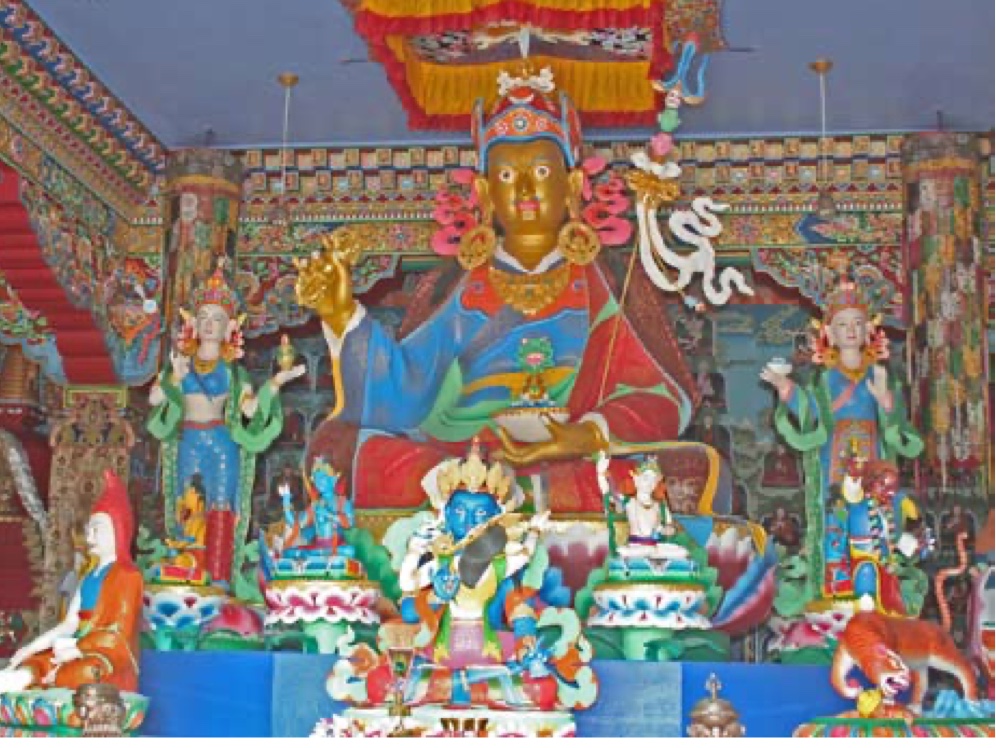
During the few years that I spent with Chagdud Rinpoche at Khadro Ling, I was always touched by his generosity as a host. Hospitality was extremely important to Rinpoche. Whenever he was expecting a guest, his house would be filled with a flurry of cleaning and cooking. In December of 2008, the residents of Khadro Ling would be joined by many guests from all over the world to consecrate the recently completed Zangdok Palri, the Pureland Palace of Guru Rinpoche. In the period leading up to their arrival, we felt as though we were preparing for a huge family reunion, and I would imagine Chagdud Rinpoche looking out of the corner of his eye, checking to see that all was in order. At times, even in the excitement, this feeling added a certain pressure.
Forty-eight hours before the consecration was to begin, I stood in the tent that would house the ceremonies, wondering how it would all happen. The silk-covered thrones were wrapped in black plastic, water poured down the tent columns, and I stood on a wet carpet. The rain was wonderful for the garden, but the time had come to set up the shrines and arrange the seats. Chagdud Rinpoche always had such an incredible power of manifestation; the shrines would seem to glow. I was sure that this event would be just like Rinpoche’s other manifestations, but as the hours ticked by and the shrine room was still in a state of disarray thanks to the rainfall, I began to ask myself how this would come about.
When we reached the twenty-four-hour countdown, the rain had finally eased. Looking from the third floor of the Lha Khang (our main temple), I could see busy sangha members carrying cushions and boxes up the path to the consecration site. With no rain to wash it away, the final layer of cement on the stairway to the path was actually sticking. There was an electricity in the air and the sound of walkie-talkies beeping. Everything and everyone was moving toward the ceremonial tent. The last of the vajra fence was painted, and the precious shrine objects were brought up to the site.
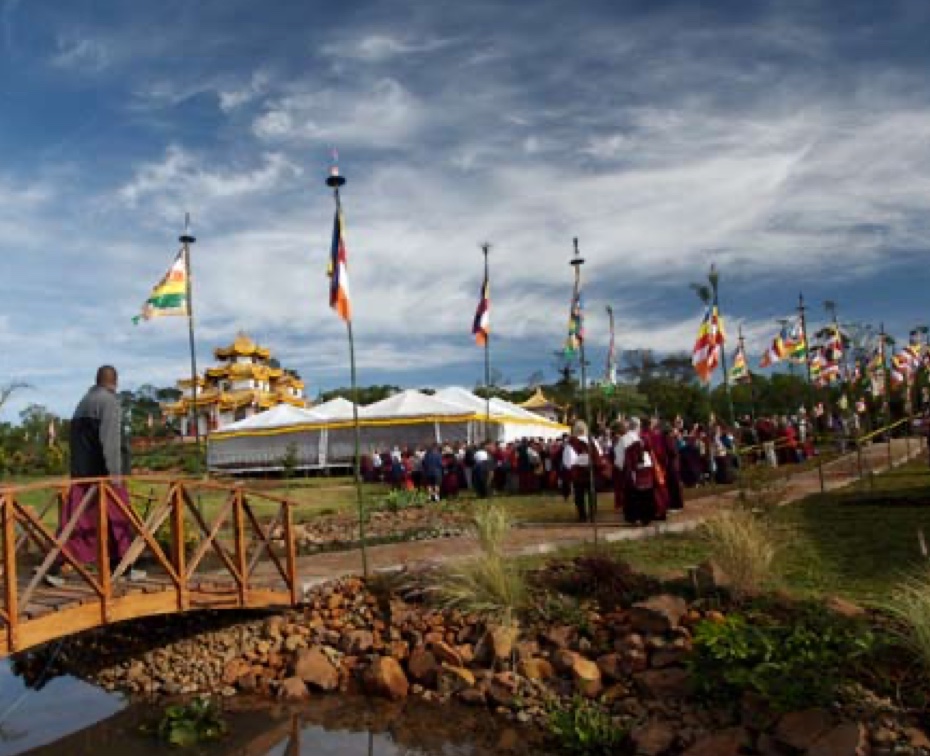
I think that many of us here at Khadro Ling were so focused on the tasks at hand that we didn’t actually notice that the Zangdok Palri had been completed. Slightly sleep deprived and nervous, I received an amazing gift from the guests who arrived. The first time it happened, I was standing on the bridge to the palace when a sangha member from abroad, eyes wet with tears, told me how incredible it was. I was startled and looked up at the palace, having to take a deep breath as we both stood there for a moment in awe.
During the three days of the consecration, I was reminded again and again of its splendor by the enjoyment shared by all those who were participating. Many of the residents here at Khadro Ling have since commented that this enjoyment encouraged in us all a greater sense of dedication. The realized masters and sangha members who joined us made the Zangdok Palri real, not only through the powerful blessings of the ceremonies but through their sincere appreciation of its creation. Entering the ceremonial tent and seeing the awesome assembly of sangha members supporting each other in the practice of consecration was a very joyful experience.
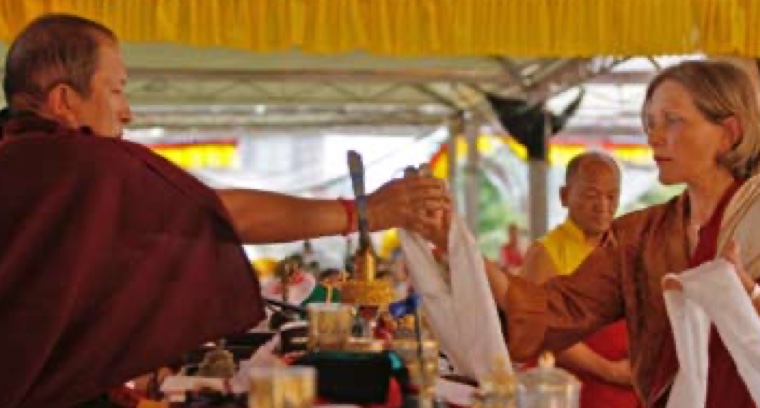
On the third day of the ceremonies, extensive offerings were made to the statues. This was an especially vivid and pleasurable time. Dzongsar Khyentse Rinpoche had suggested that, because this was the first consecration of such an elaborate nature to be performed in this part of the world, rather than using symbolic pictures of the offering substances, we acquire the actual objects. This added even more excitement to the preparations.
Two weeks before the event, Lopon Nyingku-la and Khenpo Sonam Tashi patiently explained the meaning and significance of each offering substance specified in the consecration text. Lama Sherab and Sandy Shum hit the town in search of everything from a queen and minister to five colored snakes. Our kind artists, who had worked tirelessly to complete the art of the Zangdok Palri, then carved and painted miniature thrones, wrathful malas, and other implements for offering.
Khyentse Rinpoche encouraged us to carry each offering individually, so that as many sangha members as possible could participate in the ritual. He also suggested that they dress in traditional clothing from countries all over the world to increase the auspicious interdependence. This added yet another element of joy to the ceremonies as students looked for appropriate costumes. Dressed as a Brazilian beach girl holding my offering, I was relieved to be wearing lightweight clothes in the heat of the day. The sun made the golden roofs of the Zangdok Palri shine even brighter, and one by one the offerings were carried to the vajra master and then around the palace. I couldn’t help but feel that this was a historic moment.
Out of his extraordinary loving kindness, Chagdud Rinpoche left us the project of creating a Zangdok Palri. This was and continues to be a vast field for the accumulation of merit. Chagdud Khadro, with her utter dedication, vision, and kindness, together with the support of many great lamas and the offerings and prayers of the sangha, made this possible. Almost every afternoon since the consecration ceremonies ended, visitors from all over Brazil have strolled up the path to Zangdok Palri for a glimpse of Guru Rinpoche and his mandala.
May we all take rebirth together in the pureland of Guru Rinpoche’s Glorious Copper-Colored Mountain.
— Summer Adams, Khadro Ling, Brazil
During the few years that I spent with Chagdud Rinpoche at Khadro Ling, I was always touched by his generosity as a host. Hospitality was extremely important to Rinpoche. Whenever he was expecting a guest, his house would be filled with a flurry of cleaning and cooking. In December of 2008, the residents of Khadro Ling would be joined by many guests from all over the world to consecrate the recently completed Zangdok Palri, the Pureland Palace of Guru Rinpoche. In the period leading up to their arrival, we felt as though we were preparing for a huge family reunion, and I would imagine Chagdud Rinpoche looking out of the corner of his eye, checking to see that all was in order. At times, even in the excitement, this feeling added a certain pressure.
Forty-eight hours before the consecration was to begin, I stood in the tent that would house the ceremonies, wondering how it would all happen. The silk-covered thrones were wrapped in black plastic, water poured down the tent columns, and I stood on a wet carpet. The rain was wonderful for the garden, but the time had come to set up the shrines and arrange the seats. Chagdud Rinpoche always had such an incredible power of manifestation; the shrines would seem to glow. I was sure that this event would be just like Rinpoche’s other manifestations, but as the hours ticked by and the shrine room was still in a state of disarray thanks to the rainfall, I began to ask myself how this would come about.
When we reached the twenty-four-hour countdown, the rain had finally eased. Looking from the third floor of the Lha Khang (our main temple), I could see busy sangha members carrying cushions and boxes up the path to the consecration site. With no rain to wash it away, the final layer of cement on the stairway to the path was actually sticking. There was an electricity in the air and the sound of walkie-talkies beeping. Everything and everyone was moving toward the ceremonial tent. The last of the vajra fence was painted, and the precious shrine objects were brought up to the site.
I think that many of us here at Khadro Ling were so focused on the tasks at hand that we didn’t actually notice that the Zangdok Palri had been completed. Slightly sleep deprived and nervous, I received an amazing gift from the guests who arrived. The first time it happened, I was standing on the bridge to the palace when a sangha member from abroad, eyes wet with tears, told me how incredible it was. I was startled and looked up at the palace, having to take a deep breath as we both stood there for a moment in awe.
During the three days of the consecration, I was reminded again and again of its splendor by the enjoyment shared by all those who were participating. Many of the residents here at Khadro Ling have since commented that this enjoyment encouraged in us all a greater sense of dedication. The realized masters and sangha members who joined us made the Zangdok Palri real, not only through the powerful blessings of the ceremonies but through their sincere appreciation of its creation. Entering the ceremonial tent and seeing the awesome assembly of sangha members supporting each other in the practice of consecration was a very joyful experience.
On the third day of the ceremonies, extensive offerings were made to the statues. This was an especially vivid and pleasurable time. Dzongsar Khyentse Rinpoche had suggested that, because this was the first consecration of such an elaborate nature to be performed in this part of the world, rather than using symbolic pictures of the offering substances, we acquire the actual objects. This added even more excitement to the preparations.
Two weeks before the event, Lopon Nyingku-la and Khenpo Sonam Tashi patiently explained the meaning and significance of each offering substance specified in the consecration text. Lama Sherab and Sandy Shum hit the town in search of everything from a queen and minister to five colored snakes. Our kind artists, who had worked tirelessly to complete the art of the Zangdok Palri, then carved and painted miniature thrones, wrathful malas, and other implements for offering.
Khyentse Rinpoche encouraged us to carry each offering individually, so that as many sangha members as possible could participate in the ritual. He also suggested that they dress in traditional clothing from countries all over the world to increase the auspicious interdependence. This added yet another element of joy to the ceremonies as students looked for appropriate costumes. Dressed as a Brazilian beach girl holding my offering, I was relieved to be wearing lightweight clothes in the heat of the day. The sun made the golden roofs of the Zangdok Palri shine even brighter, and one by one the offerings were carried to the vajra master and then around the palace. I couldn’t help but feel that this was a historic moment.
Out of his extraordinary loving kindness, Chagdud Rinpoche left us the project of creating a Zangdok Palri. This was and continues to be a vast field for the accumulation of merit. Chagdud Khadro, with her utter dedication, vision, and kindness, together with the support of many great lamas and the offerings and prayers of the sangha, made this possible. Almost every afternoon since the consecration ceremonies ended, visitors from all over Brazil have strolled up the path to Zangdok Palri for a glimpse of Guru Rinpoche and his mandala.
May we all take rebirth together in the pureland of Guru Rinpoche’s Glorious Copper-Colored Mountain.
— Summer Adams, Khadro Ling, Brazil


