

Chagdud Gonpa Hispanoamerica was founded to fulfill H.E. Chagdud Tulku Rinpoche’s aspiration to establish the buddhadharma—particularly the Nyingma lineage of Vajrayana Buddhism—in the Spanish-speaking countries of Latin America. Since Rinpoche’s parinirvana in 2002, the organization has been under the spiritual direction of Chagdud Khadro.
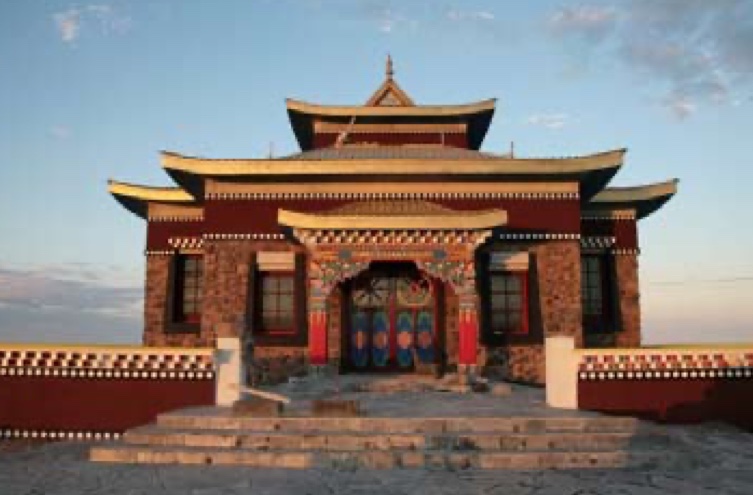
In Uruguay, about an hour and a half from Montevideo (the Uruguayan capital), amid beautiful hills, a temple known as Sengé Dzong (Lion Fortress) has been built of stone in the style of eastern Tibetan and Bhutanese temples. The interior is now being ornamented, and four statues have been sculpted by Bhutanese master artists. We are currently working in the shrine room to make it ready for retreats and ceremonies.
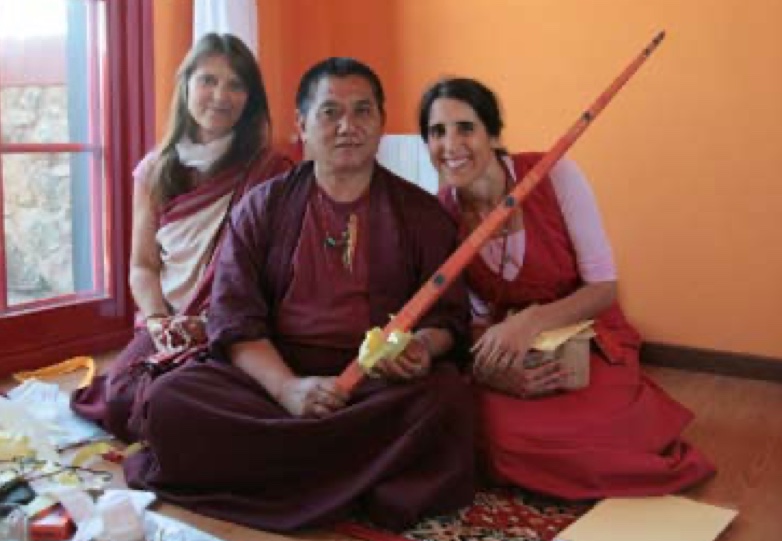
Recently, Chagdud Khadro and Lama Rigdzin Samdrub presided over the consecration of the mantra scrolls. They were then inserted into the three great images of Buddha Shakyamuni, Avalokiteshvara, and Guru Padmasambhava. Simultaneously, Lama Padma Gyatso, from Seattle, completed a Chenrezig retreat at Sengé Dzong and afterward gave teachings to the sangha.
Monthly meditations on the four thoughts that change the mind are being offered at Sengé Dzong, as is the Red Tara tsok. We are also organizing a retreat scheduled to take place in 2009 with Chagdud Khadro, Lama Tsering, Lama Chimed, and Lama Sherab. In March we will happily welcome Jigme Rinpoche, who will give teachings both at Sengé Dzong and in Montevideo.
A sangha meets weekly in Minas (the town nearest Sengé Dzong), where students receive teachings on the four thoughts that change the mind and practice Red Tara. In Montevideo itself, the sangha practices Red Tara and the Vajrayana preliminaries.
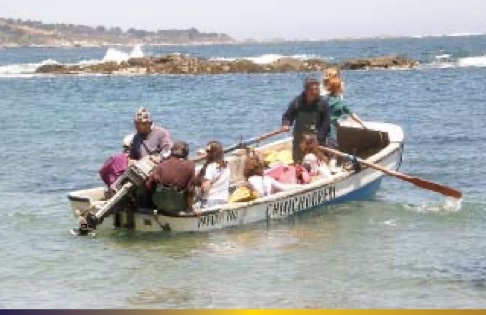
In Chile, dynamic Chagdud Gonpa sanghas in Santiago and Pirque focus their meditation training on Red Tara, the Vajrayana preliminaries, and p’howa. A small sangha in Mérida, Venezuela, practices Red Tara.
An international committee of translators and editors is working on Spanish translations of dharma books and liturgies. Among these, Puertas a la Práctica Budista (Gates to Buddhist Practice) continues to be particularly treasured by both new students and advanced practitioners.
— Ana Carla Vergara de Blaisten, Sengue (Sengé) Dzong, Uruguay
For more information, please visit Chagdud Gonpa Sengue Dzong (www.budismo.com.uy) and Chagdud Gonpa Chile (www.chagdudgonpachile.org).
Chagdud Gonpa Hispanoamerica was founded to fulfill H.E. Chagdud Tulku Rinpoche’s aspiration to establish the buddhadharma—particularly the Nyingma lineage of Vajrayana Buddhism—in the Spanish-speaking countries of Latin America. Since Rinpoche’s parinirvana in 2002, the organization has been under the spiritual direction of Chagdud Khadro.
In Uruguay, about an hour and a half from Montevideo (the Uruguayan capital), amid beautiful hills, a temple known as Sengé Dzong (Lion Fortress) has been built of stone in the style of eastern Tibetan and Bhutanese temples. The interior is now being ornamented, and four statues have been sculpted by Bhutanese master artists. We are currently working in the shrine room to make it ready for retreats and ceremonies.
Recently, Chagdud Khadro and Lama Rigdzin Samdrub presided over the consecration of the mantra scrolls. They were then inserted into the three great images of Buddha Shakyamuni, Avalokiteshvara, and Guru Padmasambhava. Simultaneously, Lama Padma Gyatso, from Seattle, completed a Chenrezig retreat at Sengé Dzong and afterward gave teachings to the sangha.
Monthly meditations on the four thoughts that change the mind are being offered at Sengé Dzong, as is the Red Tara tsok. We are also organizing a retreat scheduled to take place in 2009 with Chagdud Khadro, Lama Tsering, Lama Chimed, and Lama Sherab. In March we will happily welcome Jigme Rinpoche, who will give teachings both at Sengé Dzong and in Montevideo.
A sangha meets weekly in Minas (the town nearest Sengé Dzong), where students receive teachings on the four thoughts that change the mind and practice Red Tara. In Montevideo itself, the sangha practices Red Tara and the Vajrayana preliminaries.
In Chile, dynamic Chagdud Gonpa sanghas in Santiago and Pirque focus their meditation training on Red Tara, the Vajrayana preliminaries, and p’howa. A small sangha in Mérida, Venezuela, practices Red Tara.
An international committee of translators and editors is working on Spanish translations of dharma books and liturgies. Among these, Puertas a la Práctica Budista (Gates to Buddhist Practice) continues to be particularly treasured by both new students and advanced practitioners.
— Ana Carla Vergara de Blaisten, Sengue (Sengé) Dzong, Uruguay
For more information, please visit Chagdud Gonpa Sengue Dzong (www.budismo.com.uy) and Chagdud Gonpa Chile (www.chagdudgonpachile.org).


